
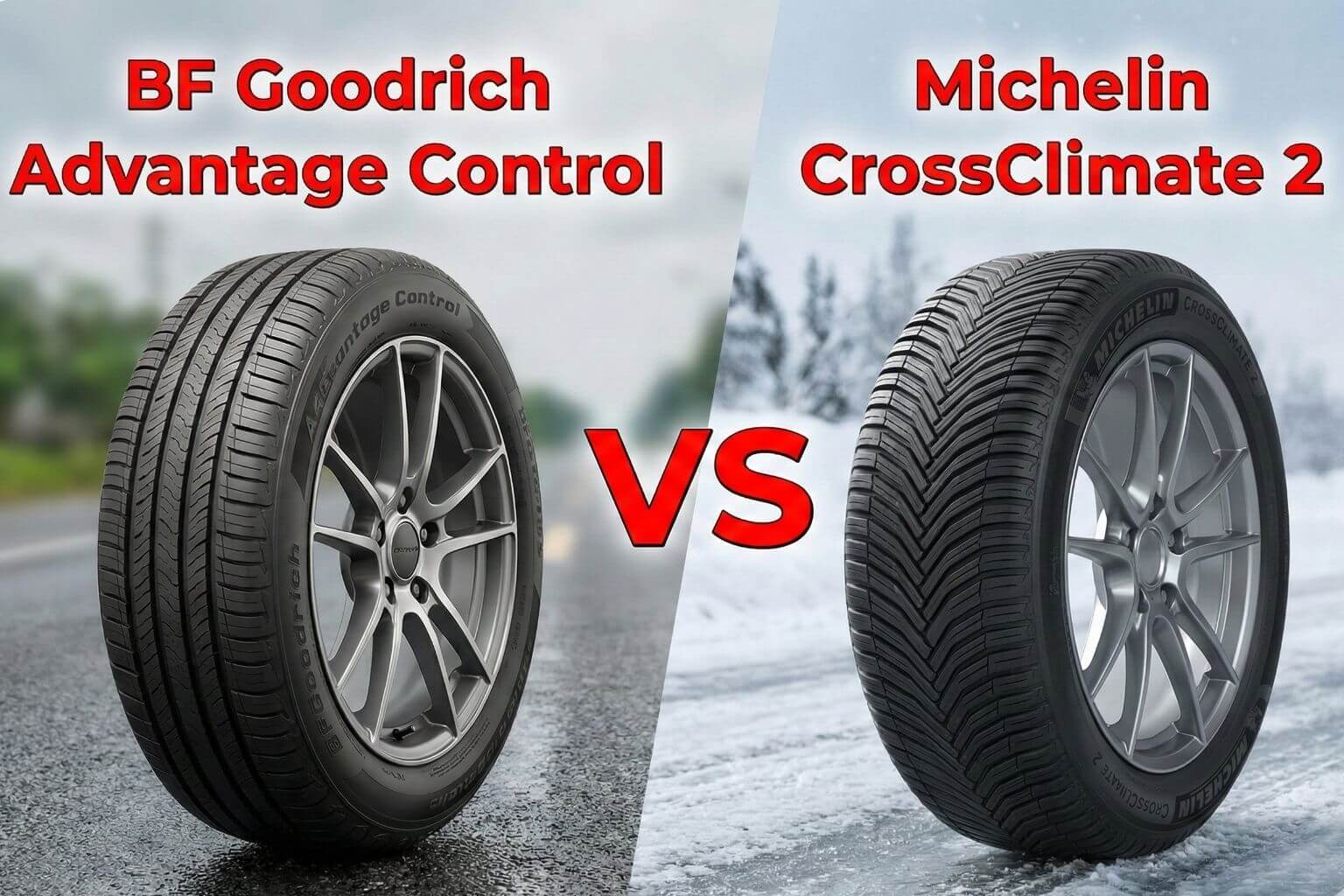
BF Goodrich Advantage Control vs Michelin CrossClimate 2
Last updated on February 16th, 2026
When it comes to choosing the right all-season tires for your vehicle, two names often come up: BF Goodrich Advantage Control vs Michelin CrossClimate 2. Both tires promise reliable performance in a variety of driving conditions, but how do they really compare when it comes to safety, traction, comfort, and long-term value?
This comparison matters because the right tire can make a significant difference in wet or snowy conditions, improve handling and braking, and ultimately save you money by lasting longer and reducing fuel consumption.
In this guide, we’ll break down the BF Goodrich Advantage Control vs Michelin CrossClimate 2 in detail, covering their performance differences, pros and cons, and who each tire is best suited for. By the end, you’ll have the insights you need to make an informed decision for your driving needs and budget.
Quick Comparison Table
| Feature | BF Goodrich Advantage Control | Michelin CrossClimate 2 |
| Tread Life | ~60,000 miles | ~70,000 miles |
| Wet Traction | Good | Excellent |
| Dry Handling | Good | Excellent |
| Snow/Ice Performance | Moderate | Excellent |
| Noise Level | Moderate | Low |
| Comfort | High | High |
| Price Range | $120–$160 | $150–$200 |
This table gives a quick snapshot of the key differences before we dive deeper.
Overview of Each Tire
BF Goodrich Advantage Control
The BF Goodrich Advantage Control is designed for drivers looking for a reliable, all-season tire that balances performance and value. Ideal for commuting and everyday driving, it offers good comfort and stable handling on both wet and dry roads. Its tread design focuses on reducing road noise while maintaining traction in light snow.
Key Features:
- Comfortable ride quality
- Solid all-season performance
- Competitive pricing
Pros and Cons
Pros:
- Affordable and good value
- Comfortable ride
- Reliable all-season performance
Cons:
- Moderate winter traction
- Slightly shorter tread life
Michelin CrossClimate 2
Michelin’s CrossClimate 2 is a premium all-season tire engineered for superior performance in a wide range of conditions, including snow and ice. It’s ideal for drivers who prioritize safety, traction, and long-term durability. With advanced tread technology, it provides excellent braking and handling in wet, dry, and winter conditions.
Key Features:
- Exceptional wet and winter traction
- Low noise and smooth ride
- Long tread life and durability
Pros and Cons
Pros:
- Excellent wet and winter performance
- Long-lasting and durable
- Quiet and comfortable ride
Cons:
- Higher price point
Performance Comparison: BF Goodrich Advantage Control vs Michelin CrossClimate 2
Wet Road Performance
Imagine driving on a rainy day. The roads are slick, and stopping quickly becomes more important than ever. That’s where wet road performance matters.
The BF Goodrich Advantage Control does a solid job here—it grips the road well, and most drivers feel confident braking in light to moderate rain. But in heavy rain or sudden stops, it might take a little longer to come to a complete stop.
On the other hand, the Michelin CrossClimate 2 feels like it’s glued to the road. Independent tests from Tire Rack and Consumer Reports show that it stops shorter in wet conditions and resists hydroplaning better. Drivers often say they feel safer taking corners and braking on slippery roads with this tire.
Real-world insight: One driver shared that while their BF Goodrich worked fine on rainy commutes, switching to Michelin gave them more confidence during heavy storms.
Dry Handling
Now, picture driving on a sunny day with clear roads. Dry handling is all about how the car responds when you turn, brake, or accelerate.
The BF Goodrich Advantage Control provides steady and predictable control. Most drivers feel comfortable at regular highway speeds, and the ride is smooth. However, at higher speeds or sharp turns, it can feel slightly less responsive.
The Michelin CrossClimate 2 shines here. It feels more precise when turning corners, and the car responds quickly to steering changes. The ride remains smooth, and the car feels planted even at faster speeds.
Imagine weaving through a winding road—Michelin gives you that little extra confidence, while BF Goodrich is reliable but a bit more relaxed in response.
Snow and Ice Performance
Winter is a whole different story. Snow and ice test a tire’s true abilities.
The BF Goodrich Advantage Control can handle light snow fairly well. Braking and starting on slushy roads is okay, but it’s not the best for deeper snow or icy conditions.
The Michelin CrossClimate 2, however, is built for winter. Its tread design and rubber allow for better traction on snow and ice. Stops are shorter, and it’s easier to drive on slippery roads. In harsh winter climates, many drivers trust Michelin for safety.
Real-life example: A driver in a snowy region said their CrossClimate 2 handled a sudden snowstorm like a champ, while their previous BF Goodrich struggled a bit on icy patches.
Noise and Comfort
Even the best-performing tire isn’t enjoyable if it’s noisy or bumpy.
The BF Goodrich Advantage Control provides a comfortable ride, absorbing most bumps and keeping noise at a moderate level. You can drive for hours without feeling fatigued.
The Michelin CrossClimate 2 is slightly quieter, with a very smooth ride. Many drivers notice less vibration, making long drives more pleasant.
Imagine a long road trip—Michelin feels like a soft cushion for your car, while BF Goodrich is comfortable but a bit more “road-sensed.”
Fuel Efficiency and Rolling Resistance
Ever wonder why some tires make your car feel like it drinks more gas? That’s due to rolling resistance—how hard the tire pushes against the road as it rolls. Lower resistance = less fuel used.
The BF Goodrich Advantage Control has decent fuel efficiency, but over time, you might notice a small difference compared to more advanced tires.
The Michelin CrossClimate 2 has slightly lower rolling resistance, which means it can help save a few dollars at the pump over the life of the tire. It’s subtle but adds up, especially for drivers who cover long distances.
A commuter noticed their fuel costs went down slightly after switching from BF Goodrich to Michelin, mostly because the car rolled easier on highways.
Durability and Tread Life
When you buy a tire, one of the most important things to consider is how long it will last. Tires don’t just cost money upfront—they also affect how often you need to replace them.
Manufacturer’s Ratings vs Real-World Results
Tire companies provide a tread life rating, which is an estimate of how many miles the tire should last. For example:
- BF Goodrich Advantage Control is rated for about 60,000 miles.
- Michelin CrossClimate 2 is rated for about 70,000 miles.
These numbers are based on controlled testing, but real-world results can be different. Drivers’ experiences show that BF Goodrich tires often reach around 55,000–60,000 miles, while Michelin tires regularly last closer to their full 70,000 miles, especially when properly maintained.
Wear Patterns Over Time
Tires don’t wear evenly all the time. How you drive, the roads you travel, and how often you rotate your tires can change the wear pattern.
- BF Goodrich Advantage Control: The tread may wear a bit faster on the outer edges if you take lots of sharp turns.
- Michelin CrossClimate 2: Tends to wear evenly and maintain grip longer, even with heavy use.
Tip: Rotating your tires every 5,000–7,500 miles can help them last longer and perform more safely.
Cost-per-Mile Analysis
Even if a tire costs more upfront, it may be cheaper in the long run if it lasts longer. Let’s compare:
- BF Goodrich Advantage Control: ~$140, lasting 60,000 miles → roughly $0.0023 per mile.
- Michelin CrossClimate 2: ~$180, lasting 70,000 miles → roughly $0.0026 per mile.
While the Michelin costs more initially, its longer life and consistent performance make it a good value for drivers who want reliability and fewer tire changes over time.
Pricing and Value
Buying a tire isn’t just about the price you see on the shelf—it’s also about how long it lasts, how well it performs, and what kind of warranty you get. Let’s break down the BF Goodrich Advantage Control and the Michelin CrossClimate 2.
Price Comparison
- BF Goodrich Advantage Control: Usually costs between $120 and $160 per tire.
- Michelin CrossClimate 2: Typically costs between $150 and $200 per tire.
At first glance, the BF Goodrich is cheaper, which makes it appealing for budget-conscious drivers. But price is just part of the story.
Warranty Coverage
- BF Goodrich Advantage Control: Comes with a 60,000-mile warranty.
- Michelin CrossClimate 2: Comes with a 70,000-mile warranty.
A longer warranty can give you extra peace of mind—it means the manufacturer expects the tire to last longer, and they’ll back it up if it doesn’t.
Long-Term Value
When thinking about value, it’s helpful to look at more than just the purchase price. Consider:
- Tread life: Michelin tires last longer, so you replace them less often.
- Performance: Michelin generally performs better in wet, dry, and snowy conditions.
- Fuel efficiency: Michelin has slightly lower rolling resistance, which can save a little gas over time.
Example: Even though a Michelin CrossClimate 2 costs more upfront, it may actually save you money in the long run because it lasts longer, handles better, and can slightly reduce fuel costs.
Who Should Choose Which Tire?
Choosing the right tire isn’t just about brand or price—it’s about what you need for your driving life. Think about your driving style, the weather where you live, your budget, and your vehicle type.
Here’s a simple way to decide which tire might be best for you.
Everyday Commuter in Mild Climates
If you mostly drive on city streets or highways, and you don’t see much snow or ice, the BF Goodrich Advantage Control is a solid choice. It’s comfortable, affordable, and reliable for everyday driving.
Imagine Sarah, a commuter in California. She drives 30 miles each day on dry, sunny roads. She wants a tire that’s safe, smooth, and doesn’t break the bank. The BF Goodrich Advantage Control fits her needs perfectly.
Drivers in Snowy or Wet Conditions
If you live somewhere that gets snow, ice, or lots of rain, the Michelin CrossClimate 2 is the safer option. It grips better in slippery conditions, stops shorter on snow and ice, and feels more stable during storms.
Tom lives in Michigan, where winter roads can be icy. He needs a tire he can trust when snow hits unexpectedly. Switching to the Michelin CrossClimate 2 gives him confidence and peace of mind.
Decision Matrix
Here’s a simple chart to help you decide:
| Need / Condition | BF Goodrich Advantage Control | Michelin CrossClimate 2 |
| Budget-Friendly | ✅ | ⚪ |
| Mild Weather / Light Rain | ✅ | ✅ |
| Snow / Ice | ⚪ | ✅ |
| Wet Road Handling | ⚪ | ✅ |
| Comfort & Smooth Ride | ✅ | ✅ |
| Long-Term Durability | ⚪ | ✅ |
Tips for Choosing All-Season Tires
- Consider your local climate and driving conditions.
- Check the vehicle type and tire size compatibility.
- Look at warranty and tread life for long-term value.
- Pay attention to user reviews and professional tests for real-world insights.
- Maintain proper tire pressure and rotation to maximize performance.
Conclusion
Both the BF Goodrich Advantage Control and Michelin CrossClimate 2 are excellent all-season tires, but the best choice depends on your priorities. If you want budget-friendly comfort, go with BF Goodrich. If you want premium performance and winter safety, Michelin CrossClimate 2 is the better investment.
Choosing the right tire can improve safety, comfort, and efficiency, so consider your driving conditions carefully before making a purchase.
FAQs: BF Goodrich Advantage Control vs Michelin CrossClimate 2
1. Can I use either tire for winter?
Both are all-season; the CrossClimate 2 is designed with stronger winter performance in mind and carries winter certification (3PMSF) in many sizes, but if you face heavy snow/ice regularly, a dedicated winter tire is still recommended.
2. Will CrossClimate 2 save me money over time despite a higher purchase price?
Possibly — Michelin’s lab/treadwear claims suggest the CrossClimate 2 can last significantly longer than some competitors, which can offset the higher upfront cost. Run cost-per-mile math based on local prices and your annual mileage.
3. Which is quieter?
Both tires are marketed and reviewed as quiet; CrossClimate 2 tends to be particularly refined at highway speeds, while Advantage Control is noted for a very smooth, quiet ride relative to its price.
