
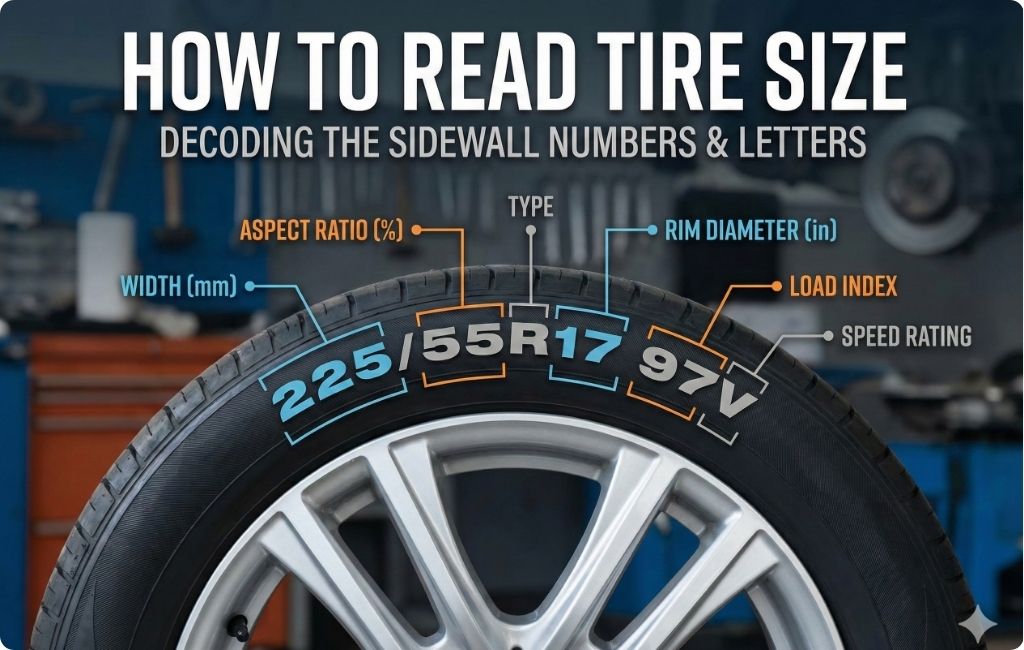
How to Read Tire Size (Simple Step-by-Step Guide for Beginners)
Last updated on February 16th, 2026
How to read tire size is easier than it looks — and it’s a small skill that saves time, money, and keeps you safe on the road. Whether you’re replacing a worn tire, shopping online, or checking fitment for an upgrade, this guide breaks down every number and letter on the sidewall (think 225/65R17 102H) into plain English so you can make the right choice without the technical headaches.
In the next few minutes you’ll learn what each part of a tire size means (width, aspect ratio, construction, rim diameter), why load index and speed rating matter, and when it’s safe — or risky — to change sizes. This post includes clear examples, a printable cheat-sheet, and quick tips for SUVs, sedans, and trucks so you can decode tire sidewalls with confidence and avoid common mistakes. Scroll down to the quick-answer section if you want the simple breakdown right away.
Quick answer (if you’re in a hurry)
A typical tire size looks like 225/65R17 102H.
Read left → right:
- 225 = tire width in millimeters
- 65 = aspect ratio (sidewall height as % of width)
- R = radial construction
- 17 = wheel (rim) diameter in inches
- 102 = load index (how much weight the tire can carry)
- H = speed rating (maximum safe speed for the tire)
Where to find your tire size
- On the tire sidewall — the full size code is printed around the tire.
- Driver’s door jamb label — many cars list the recommended tire sizes.
- Owner’s manual — manufacturer-recommended sizes and load/speed requirements.
Tip: When in doubt, follow the vehicle manufacturer’s recommended size for safety and performance.
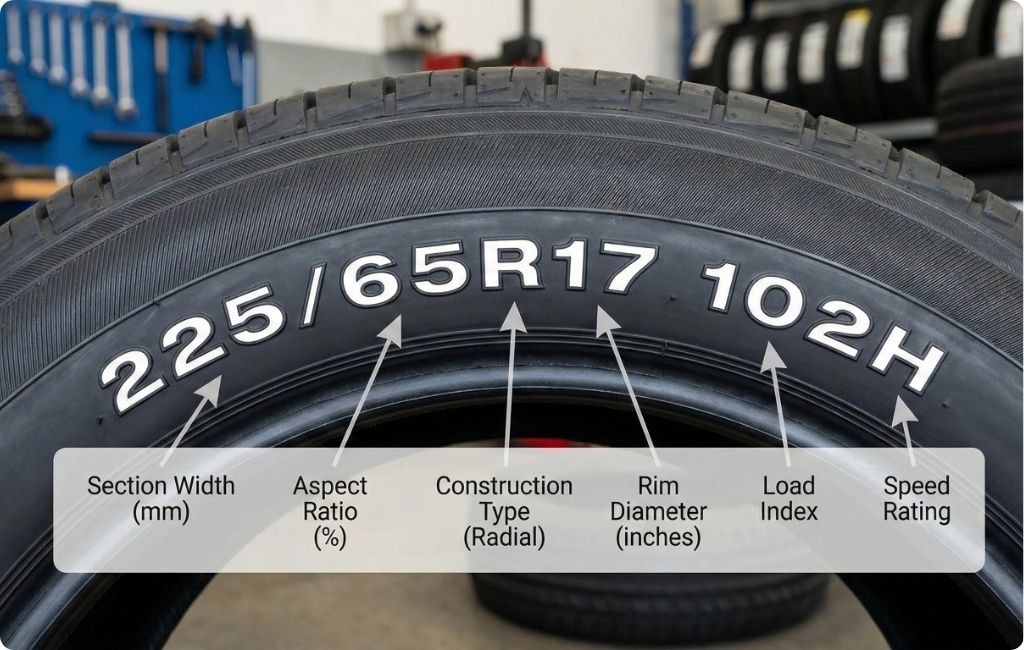
Tire size breakdown — example: 225/65R17 102H
1. Tire width — 225
- Measured in millimeters across the tread from sidewall to sidewall.
- Wider tires often give more grip but may increase road noise and slightly reduce fuel economy.
- Practical tip: Don’t assume wider is always better — match the width to your vehicle and driving needs.
2. Aspect ratio — 65
- This is a percentage: sidewall height = 65% of the width.
- A higher aspect ratio = taller sidewall = more cushioning (comfort); lower ratio = lower profile = firmer handling.
- SUVs commonly use taller profiles for load capacity and ride comfort; sports cars use lower profiles for sharper handling.
3. Construction — R
- R = Radial construction (the standard for modern tires).
- Occasionally you’ll see D (diagonal/bias) or B (bias-belted), but for most drivers, R is the relevant one.
4. Wheel diameter — 17
- The rim size in inches. A 17 tire fits a 17-inch wheel.
- This number must match the wheel — it’s not optional.
5. Load index — 102 (concept)
- A numerical code that corresponds to a maximum load-carrying capacity per tire.
- Important for SUVs and trucks: choosing a tire with too low a load index risks overloading the tire.
- How to use: Check your vehicle’s required minimum load index (owner’s manual or door jamb) and never go below it.
6. Speed rating — H (concept)
- A letter code representing the tire’s tested maximum speed capability under specified conditions.
- Common ratings: T, H, V, W, Y (higher letters mean higher tested speeds).
- Note: A higher speed rating doesn’t automatically mean “better” for everyday driving; it may cost more and slightly affect ride comfort.
Speed rating quick reference
(Use this to understand the approximate maximum speeds each letter represents.)
- T ≈ 190 km/h → ~118 mph
- H ≈ 210 km/h → ~130 mph
- V ≈ 240 km/h → ~149 mph
- W ≈ 270 km/h → ~168 mph
- Y ≈ 300 km/h → ~186 mph
Important: These are laboratory test speeds. You should always follow posted speed limits and manufacturer guidance.
How tire size affects your car (what each number influences)
- Width: grip, aquaplaning resistance, steering response, fuel economy
- Aspect ratio: ride comfort, sidewall protection, wheel/tire damage risk
- Wheel diameter: which wheels your tire will physically fit
- Load index & speed rating: safety and legal/insurance compliance; affects braking and handling under load
Can you change tire size?
Yes — sometimes — but there are rules.
Acceptable changes (usually):
- Minor changes that keep overall diameter within manufacturer tolerance (affects speedometer minimally)
- Changes recommended by the vehicle manufacturer or an authorised tuner
When it’s unsafe or illegal:
- Choosing a tire with lower load index than the vehicle requires
- Changing diameter so much that brakes or ABS sensors aren’t compatible
- Using a tire that causes the tire to rub the wheel well or suspension
What to check before changing size:
- Overall diameter (keep within ±3% of stock for speedometer and odometer accuracy)
- Load index at or above manufacturer minimum
- Speed rating at or above manufacturer recommendation (or acceptable substitute)
- Wheel width compatibility
When unsure, consult a tyre professional or your vehicle’s service manual.
If you’re considering changing tire sizes, you can use a tire size calculator to compare overall diameter and avoid speedometer issues.
Common mistakes people make when reading tire size
- Confusing width with diameter (225 is width in mm; 17 is rim diameter in inches)
- Ignoring load index (especially on SUVs and light trucks)
- Assuming any higher speed rating is better — it may be unnecessary and costlier
- Copying a friend’s tire size instead of checking what your vehicle needs
- Buying online without confirming rim fitment or clearance
Tire size cheat sheet
| Item | What it is | Where to find it | Why it matters |
| Width | mm (e.g., 225) | Sidewall | Affects grip and clearance |
| Aspect ratio | % (e.g., 65) | Sidewall | Affects comfort and handling |
| Construction | Letter (e.g., R) | Sidewall | Usually radial — standard |
| Rim diameter | inches (e.g., 17) | Sidewall | Must match wheel |
| Load index | Number (e.g., 102) | Sidewall | Minimum weight capacity |
| Speed rating | Letter (e.g., H) | Sidewall | Max tested speed |
FAQs
Can I use a different tire size than stock?
Sometimes — small changes are usually fine if overall diameter, load index and clearance remain compatible. For major changes, consult the manufacturer or a tyre professional.
What happens if tire size is wrong?
Possible issues include inaccurate speedometer, reduced fuel economy, poor handling, increased wear, and safety risks.
How do I know which tire size fits my SUV?
Check the door jamb, owner’s manual, or the current tire sidewall for the manufacturer-recommended size and load/speed ratings.
Where can I find the load index table?
Load index tables are standard — include a link to an authoritative source (e.g., tire manufacturers or Tire & Rim Association) in your post so readers can look up exact kg/lb values.
Conclusion: Read Tire Size With Confidence
Learning how to read tire size may seem confusing at first, but once you understand what each number and letter represents, it becomes a simple and valuable skill for every driver. By knowing how to identify tire width, aspect ratio, wheel diameter, load index, and speed rating, you can confidently choose tires that fit your vehicle, support its weight, and perform safely on the road.
Taking a few minutes to check your tire sidewall or owner’s manual can help you avoid common mistakes, improve ride comfort, and protect your vehicle’s handling and braking performance. Whether you’re replacing worn tires, shopping online, or considering a size change, understanding tire size ensures you make informed decisions rather than guessing.
In short, once you know how to read tire size, you’re better equipped to choose the right tires for your driving needs, vehicle type, and safety requirements—saving time, money, and unnecessary risk in the long run.
